Budapest is the capital and largest city of Hungary, formally created in 1873 through the union of three separate towns: «Buda» and «Óbuda» on the western bank of the Danube, and «Pest» on the eastern bank. The Romans settled the area in antiquity, after which Buda became the seat of Hungary's kings while Pest flourished as a commercial and industrial center.
The Pearl of the Danube
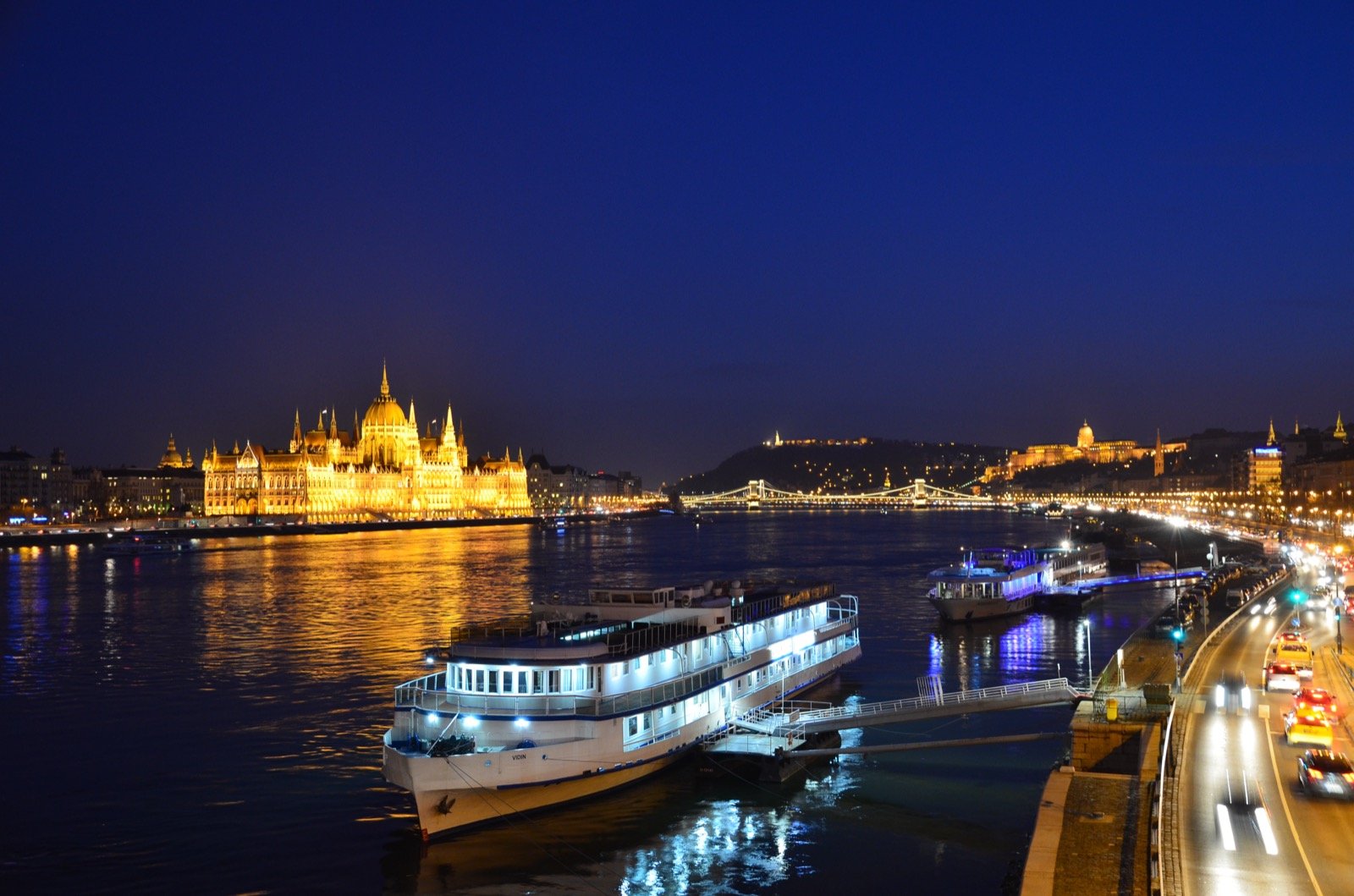
The Danube River splits the city in two, linked by historic bridges, most notably the «Chain Bridge», opened in 1849 as the first permanent bridge connecting Buda and Pest. Budapest is famed for its natural thermal baths, a legacy of the Ottoman era, the grandest of which is «Széchenyi Bath», one of the largest thermal bath complexes in Europe. The stately «Hungarian Parliament Building» overlooks the riverbank as one of the world's most beautiful neo-Gothic government buildings.
- The Chain Bridge was the first permanent bridge linking Buda and Pest, opened in 1849
- Széchenyi thermal baths are among the largest bath complexes in Europe
- The Hungarian Parliament Building is one of the largest government buildings in the world
- Buda Castle and the Danube banks are a UNESCO World Heritage Site
Budapest today is known for its romantic nighttime atmosphere, when its historic landmarks light up along the Danube, and for its lively nightlife in «ruin bars» — abandoned old buildings converted into trendy hangouts.