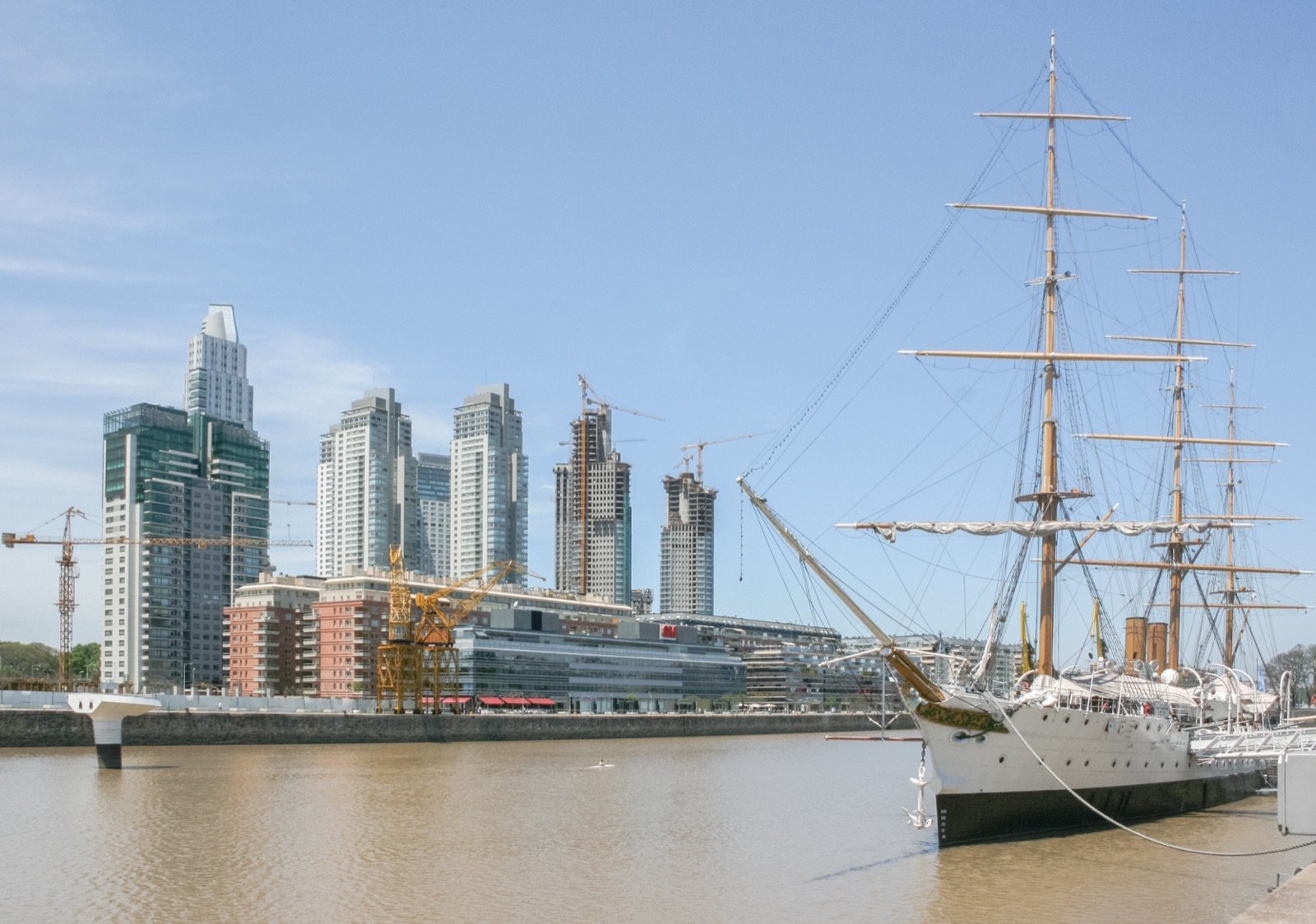
Buenos Aires is the capital and largest city of Argentina, located on the southwestern bank of the Río de la Plata estuary. Spanish explorer Pedro de Mendoza first attempted to found the city in 1536 before it was destroyed by indigenous resistance; it was permanently refounded by Juan de Garay in 1580, later becoming one of South America's most important ports and the capital of independent Argentina.
The Birthplace of Tango
Buenos Aires flourished in the late 19th and early 20th centuries through large waves of European immigration, particularly Italian and Spanish, who left the city with grand European-style architecture that earned it the nickname «Paris of South America». In working-class immigrant neighborhoods like La Boca, tango was born in the late 19th century as a musical and dance expression of longing and identity, later becoming a global art form inscribed on UNESCO's Intangible Cultural Heritage list.
- The colorful La Boca neighborhood, birthplace of tango
- Teatro Colón, one of the world's finest opera houses acoustically
- Casa Rosada, the pink presidential palace on Plaza de Mayo
- Historic Recoleta Cemetery, resting place of prominent Argentine figures
Today Buenos Aires is a leading cultural and economic center in Latin America, home to numerous theaters and literary cafés, and the city that shaped celebrated writers such as Jorge Luis Borges, who portrayed it throughout much of his work.