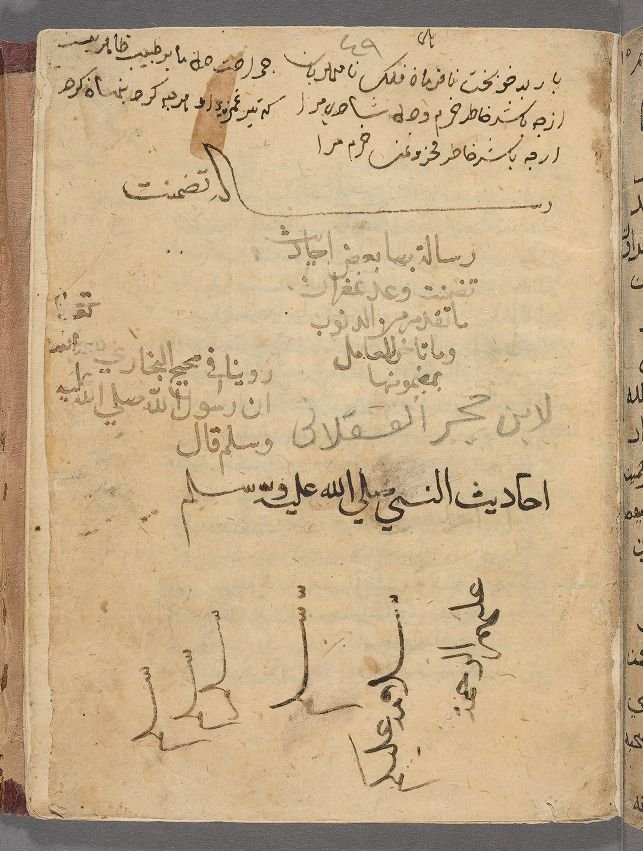
Ahmad ibn Ali ibn Hajar al-Asqalani was born in Cairo to a family originally from Ashkelon in Palestine, and was orphaned as a young child, raised under the care of guardians who attended to his education, memorizing the Qur'an by the age of nine. Ibn Hajar traveled in pursuit of hadith to the Hejaz, Yemen, Damascus, and other regions of Egypt, meeting the leading hadith scholars of his time, and rose among them to be called "the foremost hadith authority of the age" in recognition of his vast memory and mastery of hadith science and its narrators.
Fath al-Bari and His Scholarly Career
Ibn Hajar spent roughly twenty-five years writing his book Fath al-Bari bi-Sharh Sahih al-Bukhari, still regarded today as the most comprehensive and precise commentary ever written on Sahih al-Bukhari, for its meticulous analysis of chains of transmission and texts, and its thorough engagement with the views of earlier commentators. He also authored his encyclopedic Al-Isaba fi Tamyiz al-Sahaba, the most extensive biographical dictionary of the Prophet's Companions, alongside Tahdhib al-Tahdhib, a biographical dictionary of hadith narrators. Alongside his scholarship, Ibn Hajar served multiple terms as chief judge of Egypt, and taught at al-Azhar and Cairo's major schools for decades, training a wide generation of scholars.
- Authored Fath al-Bari, the most celebrated and comprehensive commentary on Sahih al-Bukhari
- Wrote Al-Isaba fi Tamyiz al-Sahaba, the most extensive biographical dictionary of the Companions
- Served multiple terms as chief judge of Egypt
- Taught at al-Azhar, training a wide generation of hadith scholars
Ibn Hajar al-Asqalani died in Cairo in 1449 CE, with vast crowds attending his funeral in recognition of his standing, and Fath al-Bari remains to this day the foremost reference for understanding Sahih al-Bukhari in the Islamic library.