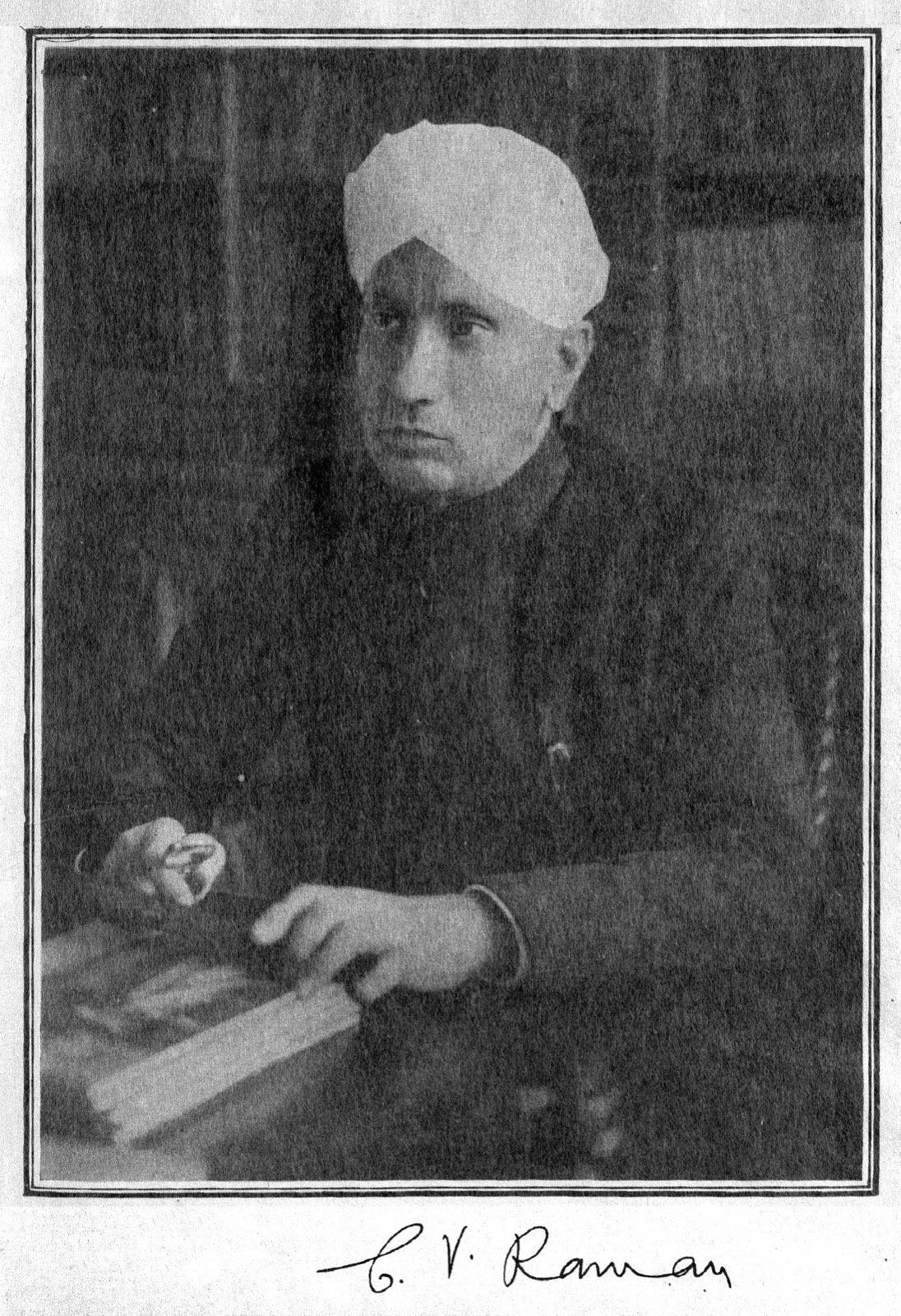
Chandrasekhara Venkata Raman was born in 1888 in Tiruchirapalli, India, showing early academic brilliance that saw him graduate top of his class from Presidency College, Madras, at just sixteen. He initially worked as a government finance official, but pursued physics research in his spare time at the Indian Association for the Cultivation of Science in Calcutta.
In 1921, during a sea voyage where he observed the deep blue color of the Mediterranean, Raman began questioning the cause of this color and started a series of investigations into light scattering. In 1928, with his assistant K.S. Krishnan, he discovered that when monochromatic light passes through a transparent liquid, a small fraction scatters at a different frequency than the incident light — a phenomenon later known as the «Raman effect».
Scientific Legacy
Raman was awarded the 1930 Nobel Prize in Physics for this discovery, becoming the first Asian scientist to win a Nobel Prize in science for research conducted entirely in his home country. The Raman effect later became the foundation of «Raman spectroscopy», widely used in chemistry, medicine, and materials science to analyze molecular composition. He founded the Raman Research Institute in Bangalore and continued teaching and researching until his death in 1970.