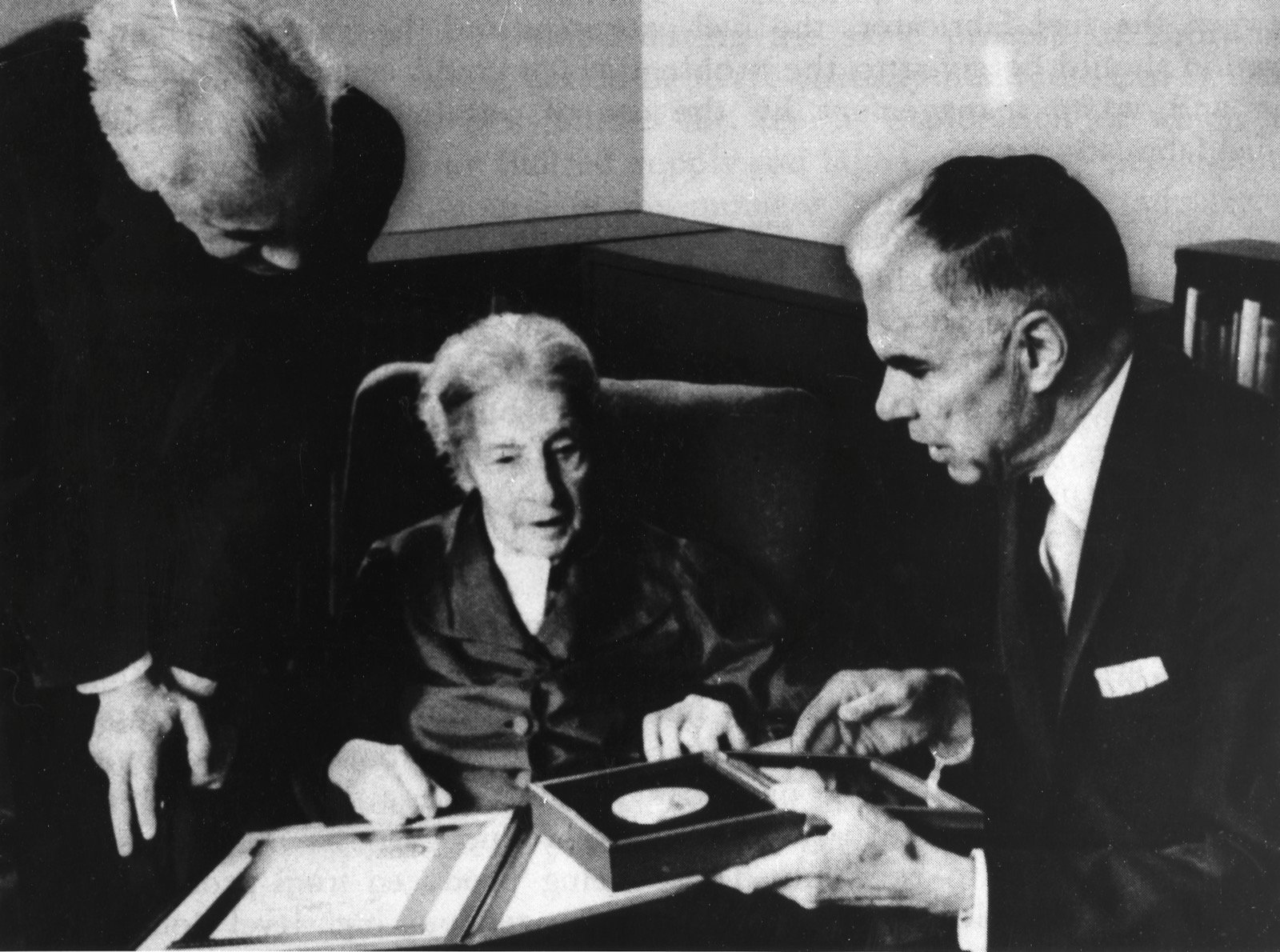
Lise Meitner was born in 1878 in Vienna, Austria, becoming the second woman to earn a physics doctorate from the University of Vienna in 1906. She moved to Berlin and worked for decades alongside chemist Otto Hahn at the Kaiser Wilhelm Institute, forming a successful research partnership studying radioactivity and radioactive isotopes.
Meitner was forced to flee Nazi Germany in 1938 due to her Jewish heritage, settling in Sweden. When Hahn and his colleague Fritz Strassmann bombarded uranium nuclei with neutrons and observed puzzling results, they wrote to Meitner, who theoretically explained the phenomenon in collaboration with her nephew, physicist Otto Frisch: the uranium nucleus had actually split into two lighter nuclei, releasing an enormous amount of energy — a phenomenon they named «nuclear fission».
Scientific Legacy
The 1944 Nobel Prize in Chemistry was awarded solely to Otto Hahn for the discovery of nuclear fission, with no recognition of Meitner's decisive theoretical contribution to explaining the phenomenon — later cited as one of the most striking instances of women overlooked in Nobel history. Meitner refused to participate in developing the atomic bomb and continued her nuclear research in Sweden. In her honor, chemical element 109, «meitnerium», was named after her. She died in 1968.